
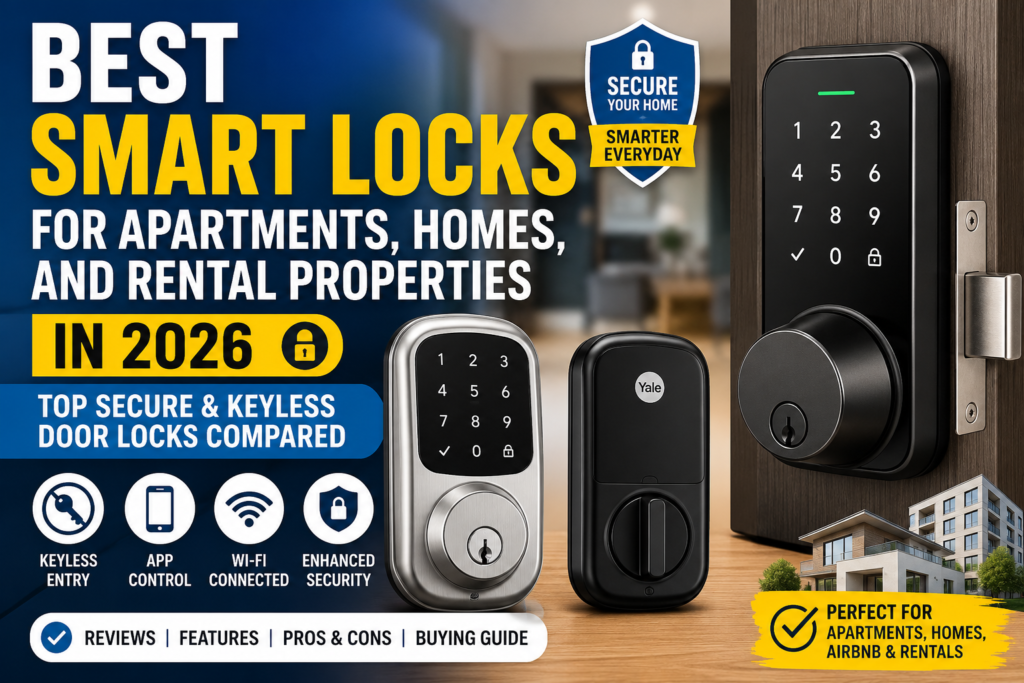
mart Locks
If you’ve ever stood outside your own front door at 11 p.m., patting down every pocket for keys you swore you packed, you already understand why smart locks have become one of the most searched home upgrades of the year. Locked out. Lost keys. A dog walker who needs access on Tuesdays but not Sundays. An Airbnb guest checking in at 2 a.m. while you’re asleep on another continent. A tenant who “definitely” returned their key but somehow didn’t.
These aren’t hypothetical annoyances — they’re the daily reality for homeowners, renters, landlords, and short-term rental hosts alike. And they’re exactly the problems that a good smart lock is built to solve.
This guide brings together everything you need to choose the best smart locks for apartments, homes, and rental properties in 2026 — whether you own your house outright, rent a one-bedroom walk-up, manage a portfolio of rental units, or run a busy Airbnb. We’ll compare keyless door locks, smart deadbolts, and retrofit options across price points, walk through real pros and cons, and answer the buying questions that actually matter: battery life, WiFi vs. Bluetooth, rekeying rules for renters, and compatibility with Alexa, Google Assistant, Apple HomeKit, and the newer Matter standard.
No fluff, no filler — just a practical, experience-based breakdown to help you pick a lock you’ll actually trust.
Why Smart Locks Matter More Than Ever in 2026
Smart home adoption has moved well past the early-adopter phase. According to industry research on connected home devices [PLACEHOLDER: cite recent smart home adoption statistics report], smart locks are now among the top three most-purchased smart home devices in North America, trailing only smart speakers and video doorbells. That shift isn’t accidental — it reflects three converging trends:
- Remote property management has exploded. Airbnb hosts, property managers, and landlords increasingly need to grant and revoke access without being physically present.
- Keyless entry has gone mainstream. PIN codes, fingerprint scanners, and smartphone unlocking are no longer novelties; they’re expected features in new-build apartments and renovated homes.
- Security expectations have risen. With package theft, subletting fraud, and lock-picking tutorials all over social media, people want locks that log every entry and alert them to unusual activity.
Whether your priority is convenience, security, or remote management, there’s a best smart lock for apartments, homes, and rental properties that fits your specific situation — you just need to know what to look for.
also read: https://gadgetsentinel.com/outdoor-security-cameras-2026/
Quick Comparison: Best Smart Locks 2026 at a Glance
| Smart Lock | Type | Connectivity | Keypad | App Access | Voice Assistant Support | Price Range | Best For |
|---|---|---|---|---|---|---|---|
| August Wi-Fi Smart Lock (4th Gen) | Retrofit deadbolt | WiFi + Bluetooth | No (add-on required) | Yes | Alexa, Google, HomeKit, Matter | $$ | Renters & apartments |
| Schlage Encode Plus | Smart deadbolt | WiFi + Bluetooth | Yes | Yes | Alexa, HomeKit, Matter | $$$ | Homeowners wanting no hub |
| Yale Assure Lock 2 | Smart deadbolt | WiFi/Zigbee (module) | Yes | Yes | Alexa, Google, HomeKit, Matter | $$$ | Flexible connectivity needs |
| Level Lock+ | Invisible retrofit | Bluetooth (+WiFi bridge) | No | Yes | Alexa, Google, HomeKit | $$$$ | Design-conscious homeowners |
| Kwikset Halo Touch | Smart deadbolt | WiFi | Fingerprint + code | Yes | Alexa, Google | $$ | Budget-conscious families |
| Ultraloq U-Bolt Pro | Smart deadbolt | WiFi + Bluetooth | Fingerprint + code | Yes | Alexa, Google | $$ | Best value all-rounder |
| Igloohome Smart Deadbolt | Standalone (offline capable) | Bluetooth + optional bridge | Yes | Yes (offline PINs) | Alexa, Google | $$ | Airbnb & rental properties |
| RemoteLock RG Series | Commercial-grade retrofit | WiFi + Z-Wave | Yes | Yes (property mgmt platform) | Alexa, Google | $$$ | Property managers, multi-unit buildings |
| Wyze Lock Bolt | Smart deadbolt | Bluetooth (+ gateway) | Yes (Keypad add-on) | Yes | Alexa, Google | $ | Tightest budgets |
| Aqara Smart Lock U100 | Smart deadbolt | Bluetooth + Matter | Fingerprint + code | Yes | Alexa, Google, HomeKit, Matter | $$ | Matter/smart home ecosystem users |
Price key: $ = under $120 | $$ = $120–$220 | $$$ = $220–$320 | $$$$ = $320+
In-Depth Reviews: The 10 Best Smart Locks for Apartments, Homes, and Rental Properties
1. August Wi-Fi Smart Lock (4th Generation)
The August Wi-Fi Smart Lock has been a go-to recommendation for renters for years, and the 4th generation keeps that reputation intact. It fits over your existing deadbolt from the inside, meaning the exterior of your door — and your landlord-approved keyhole — stays completely untouched.
Features:
- Installs in about 10–15 minutes over most standard deadbolts
- Built-in WiFi, no separate bridge required
- Auto-lock and auto-unlock based on your phone’s location
- Works with existing keys alongside the smart function
- Activity log showing who came and went, and when
Pros:
- Doesn’t alter the exterior of the door, ideal for rental agreements
- Easy DIY install without a locksmith
- Strong app with guest access scheduling
Cons:
- No built-in keypad (sold separately)
- Slightly bulky on the interior side of the door
- Auto-unlock via geofencing can be inconsistent on some phones
Best For: Renters and apartment dwellers who need a no-drill, landlord-friendly upgrade.
Price Range: $$ (mid-range)

- SMARTER LOCK, SAME DEADBOLT: Your August Wi-Fi Smart Lock installs on the inside of your door without having to replace …
- UNLOCK WITH YOUR FINGERPRINT: Your fingerprint is now the unique key you’ll never lose. Simply use the fingerprint scann…
- ACCESS FOR ALL: Everyone in your household can come and go as they please by using Fingerprint touch, Auto-Lock, Auto-Un…
2. Schlage Encode Plus
Schlage has built a long-standing reputation in traditional lock hardware, and the Encode Plus is its flagship smart deadbolt. It’s a full deadbolt replacement rather than a retrofit, which means better long-term reliability and a more finished look.
Features:
- Built-in WiFi — no hub or bridge needed
- Apple Home key support for tap-to-unlock with an iPhone or Apple Watch
- Keypad with customizable PIN codes for up to 100 users
- Reinforced deadbolt with anti-pick and anti-drill features
Pros:
- Excellent physical security ratings
- No third-party hub required for remote access
- Strong Apple HomeKit integration, including Matter support
Cons:
- Higher price point than most competitors
- Requires full deadbolt replacement (not ideal for renters)
- Larger interior housing may not suit narrow doors
Best For: Homeowners who want a premium, all-in-one smart deadbolt without extra hardware.
Price Range: $$$ (premium)

- ANYWHERE ACCESS: With built-in WiFi compatibility, you can easily and securely connect your Schlage Encode Plus lock to …
- PEACE OF MIND: Lock and unlock from anywhere, manage up to 100 access codes, view lock history, receive customizable not…
- TAP TO UNLOCK: Works with Apple HomeKit and Apple home keys; with home keys you can simply tap to lock or unlock using y…
3. Yale Assure Lock 2
Yale’s Assure Lock 2 stands out for its modularity. You choose the connectivity module — WiFi, Z-Wave, or Matter-ready — meaning the lock can grow with your smart home setup rather than locking you into one ecosystem.
Features:
- Interchangeable connectivity modules
- Slim keypad or lever-style options
- Auto-relock and one-touch locking
- Works with Samsung SmartThings, Google Home, Alexa, and HomeKit depending on module
Pros:
- Highly customizable to existing smart home setups
- Sleek, modern design options
- Reliable keypad responsiveness even in cold weather
Cons:
- Modules sold separately, which adds to total cost
- Setup can be confusing for non-technical users
- Full deadbolt replacement required
Best For: Homeowners already invested in a specific smart home ecosystem.
Price Range: $$$ (premium)
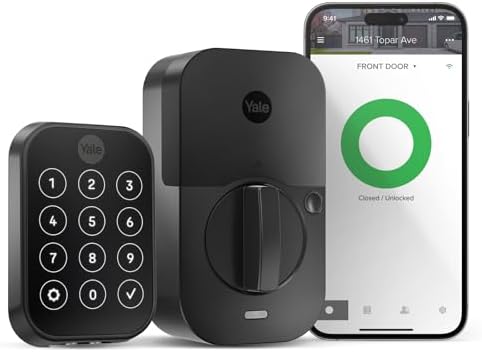
- KEYLESS ENTRY WITH A TOUCHSCREEN KEYPAD: The Yale Assure Lock 2 is a keyless entry door lock with Wi-Fi and a sleek, res…
- BUILT-IN WI-FI, NO HUB REQUIRED: Monitor lock status, receive real-time activity alerts, and grant or revoke access from…
- ELECTRONIC DOOR LOCK WITH CODE SHARING: Create and share unlimited unique access codes for family, housekeepers, guests,…
4. Level Lock+
If you hate the look of bulky smart locks, Level built its entire brand around solving that problem. The Level Lock+ fits entirely inside the door — from the outside, it looks like a completely normal deadbolt.
Features:
- Fits inside standard deadbolt hardware, invisible from outside
- Bluetooth-based with optional WiFi bridge for remote access
- Apple Home key and HomeKit-native support
- Uses standard house keys as a backup
Pros:
- Most discreet smart lock on the market
- Excellent for design-conscious buyers or historic homes
- Long battery life due to efficient Bluetooth-first design
Cons:
- Most expensive lock on this list
- Bluetooth-only unless you buy the separate bridge
- Installation is more involved than typical retrofit locks
Best For: Homeowners who want smart functionality without sacrificing curb appeal.
Price Range: $$$$ (top-tier)

- SMART LOCK, SMARTER DESIGN: Seamlessly integrate Lock+ with your existing door hardware, with no visible technology on t…
- TAP TO ENTER WITH APPLE HOME KEY: Forget your keys at home – on purpose. Access your home effortlessly by tapping Lock+ …
- CONTROL YOUR LOCK FROM ANYWHERE: With Level Connect Wi-Fi bridge (included) you can remotely lock/unlock your door, view…
5. Kwikset Halo Touch
Kwikset’s Halo Touch brings fingerprint access to a genuinely affordable price point, making it a strong pick for families who want biometric convenience without the premium cost.
Features:
- Fingerprint scanner stores up to 50 fingerprints
- Built-in WiFi for remote lock/unlock
- Auto-lock timer
- Compatible with Kwikset SmartKey for physical backup
Pros:
- Budget-friendly given the fingerprint feature
- No hub required
- Simple, intuitive app
Cons:
- Fingerprint sensor can struggle in wet or cold conditions
- Plasticky build compared to Schlage or Yale
- Limited third-party smart home integrations
Best For: Families who want fast biometric access at an accessible price.
Price Range: $$ (mid-range)

- Proximity Locking Satin Nickel Finish.Note: Measure your door’s backset, cross bore and thickness to ensure you find the…
- Receive Notifications: Monitor home security with notifications of your lock’s activity and view the lock event history …
6. Ultraloq U-Bolt Pro
The Ultraloq U-Bolt Pro consistently ranks among the best value smart locks because it packs fingerprint access, a keypad, WiFi, and Bluetooth into one of the more affordable full-deadbolt replacements available.
Features:
- Fingerprint, PIN code, app, key fob, and physical key access — five entry methods
- WiFi hub sold separately for remote access
- Auto-unlock via Bluetooth proximity
- Weatherproof housing
Pros:
- Exceptional value for the number of access methods included
- Fast fingerprint recognition
- Strong build quality for the price
Cons:
- WiFi bridge is an additional purchase for full remote functionality
- App occasionally lags with sync updates
- Not ideal for renters since it replaces the entire deadbolt
Best For: Buyers who want maximum access flexibility on a mid-range budget.
Price Range: $$ (mid-range)
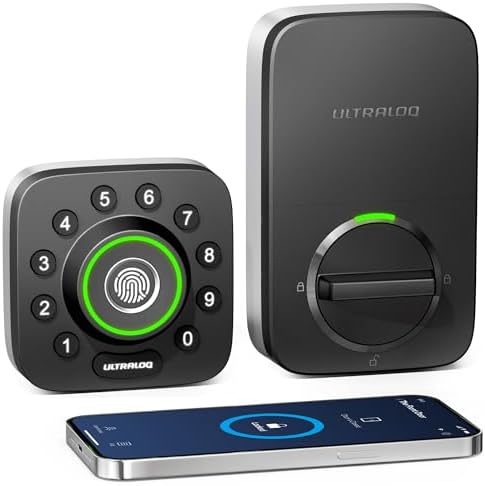
- 6-in-1 Keyless Entry Smart Lock: Fingerprint + Anti-peep Keypad + Smartphone + Auto Unlock + Shake to Open + Mechanical …
- 360° Live Fingerprint ID: Just one touch to unlock your door with your fingerprint from any angle
- Anti-peep Keypad with Backlight: You can type in any number of random digits, and can still gain access as long as the 1…
7. Igloohome Smart Deadbolt
Igloohome built its name specifically around short-term rentals and vacation properties, and it shows. The standout feature is its ability to generate one-time or time-limited PIN codes entirely offline — no internet connection required at the property.
Features:
- Algorithm-generated time-bound PIN codes, even without WiFi
- Bluetooth-based with optional bridge for remote management
- Bulk PIN generation for cleaning staff, guests, and contractors
- Detailed access logs for every code used
Pros:
- Works reliably in properties with spotty or no internet
- Purpose-built for Airbnb and vacation rental turnover schedules
- No recurring dependency on cloud connectivity for core functions
Cons:
- App interface feels more utilitarian than premium
- Limited voice assistant integration compared to competitors
- Physical design is less sleek than Level or Yale
Best For: Airbnb hosts and vacation rental owners managing remote or rural properties.
Price Range: $$ (mid-range)

- Instant Remote Access: Utilize our unique algoPIN technology to generate and share secure PIN codes from anywhere, ensur…
- Smart Entry Options: Enjoy keyless convenience with fingerprint access, a user-friendly physical keypad with tactile but…
- Enhanced Security & Convenience: ANSI-tested for reliable quality. Auto relock secures your door with a selectable 5-180…
8. RemoteLock RG Series
For landlords and property managers overseeing multiple units, RemoteLock isn’t just a lock — it’s a management platform. It integrates with property management software to automate access based on lease dates, bookings, or maintenance schedules.
Features:
- Integrates with major property management and vacation rental platforms
- Auto-generates and expires codes based on lease or booking dates
- Supports both WiFi and Z-Wave connectivity
- Centralized dashboard for managing dozens or hundreds of doors
Pros:
- Purpose-built for scaling across multiple properties
- Reduces manual work for turnover-heavy rental businesses
- Strong audit trail for compliance and dispute resolution
Cons:
- Overkill and costly for a single-door household
- Subscription fees apply for full platform functionality
- Installation typically benefits from professional help at scale
Best For: Property managers and landlords with multiple rental units.
Price Range: $$$ (premium, plus subscription)
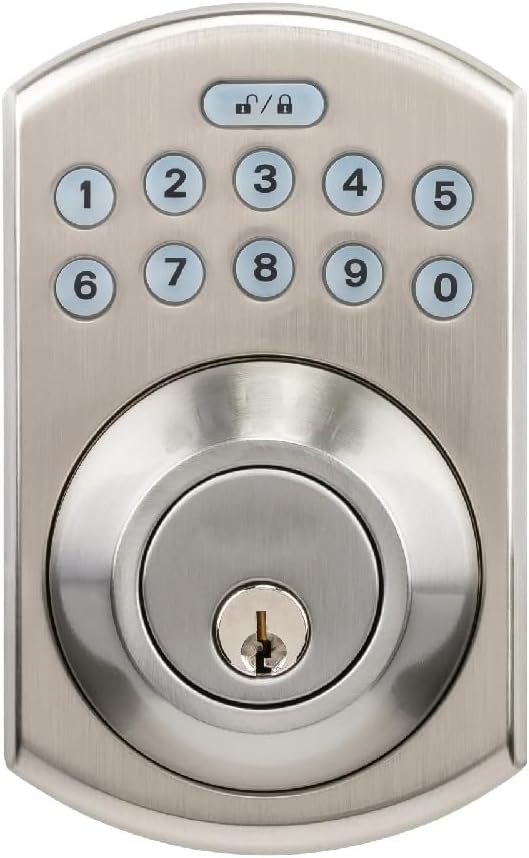
- Residential Grade Smart Lock: The KeyInCode 3500 Series Deadbolt is suitable for any home, small office or vacation rent…
- BLE Enabled Technology: Accelerate lock onboarding and Wi-Fi setup via Bluetooth. Mobile app also allows for manually lo…
- Easy Installation and Use: Designed for easy installation, connection and use with no additional controller or hub requi…
9. Wyze Lock Bolt
Wyze has built its brand on affordable smart home devices, and the Lock Bolt continues that tradition. It won’t have every premium feature, but for anyone testing whether a smart lock fits their lifestyle, it’s a low-risk entry point.
Features:
- Compact, low-profile design
- Bluetooth connectivity with optional Wyze Gateway for remote access
- Optional keypad accessory sold separately
- Auto-lock and unlock scheduling
Pros:
- Among the most affordable smart deadbolts available
- Simple installation process
- Reliable app performance for a budget device
Cons:
- Remote access requires the separate Gateway purchase
- Fewer third-party integrations
- Build quality feels less robust than premium competitors
Best For: Budget-conscious renters or first-time smart lock buyers.
Price Range: $ (budget)

- Effortless Entry, Lasting Clarity: Unlock in 0.5 seconds with Wyze Lock Bolt v2’s fingerprint scanner. Its scratch and s…
- The Lock That Learns with You: Our AI smart lock learns from every touch, constantly improving to deliver faster, more a…
- 8-Month Power with Emergency Backup: Includes 8 AA batteries for up to 8 months of use. If batteries die, the USB-C port…
10. Aqara Smart Lock U100
Aqara has leaned hard into the Matter smart home standard, and the U100 is one of the more future-proof options on this list, with strong cross-platform compatibility baked in from the start.
Features:
- Fingerprint, PIN code, NFC card, app, and mechanical key access
- Native Matter support for cross-platform compatibility
- Bluetooth with optional Aqara Hub for WiFi/remote access
- Compact keypad with backlit numbers
Pros:
- Excellent multi-ecosystem compatibility (Alexa, Google, HomeKit, Matter)
- Strong value considering the number of access methods
- Fast, accurate fingerprint sensor
Cons:
- Best features require an Aqara Hub, sold separately
- Brand has less long-term US market history than Schlage or Kwikset
- Manual and app could use clearer onboarding
Best For: Tech-forward homeowners building a Matter-based smart home.
Price Range: $$ (mid-range)

- 【Apple Home and Home Key Support】The U100 is a smart door lock that is fully integrated into Apple Home. It can be unloc…
- 【Fingerprint and More Ways to Unlock】The Smart Lock U100 offers multiple ways to unlock, including a high-precision fing…
- 【Automations with Aqara and Third-Party Devices】With an Aqara Zigbee 3.0 hub, the Smart Door Lock U100 is compatible wit…
Buying Guide: How to Choose the Best Smart Lock for Your Situation
Picking from a list of great locks is only half the job. The right choice depends heavily on whether you own your home, rent an apartment, or manage a rental property — so let’s break down the decision-making process properly.
Types of Smart Locks
1. Retrofit Smart Locks These attach over your existing deadbolt from the inside, leaving the exterior keyhole untouched. They’re the go-to option for apartment smart locks because most leases prohibit permanent hardware changes. August and Level both fall into this category.
2. Full Deadbolt Replacement Locks These replace your entire deadbolt, inside and out. They typically offer more robust features — built-in keypads, fingerprint scanners, sturdier construction — but require homeowner-level control over the door. Schlage, Yale, Kwikset, and Ultraloq are the major players here.
3. Standalone/Offline-Capable Locks Designed for properties where internet access can’t be guaranteed, these locks (like Igloohome) generate time-limited codes algorithmically without needing a live connection, which makes them a strong fit for rental property smart locks in remote areas.
4. Commercial/Multi-Unit Platforms Built for landlords and property managers, these integrate with property management software to automate access at scale, rather than being managed lock-by-lock.
Important Features to Consider
- Multiple access methods. PIN code, fingerprint, app, key fob, and physical key backup all matter — especially for properties with guests, staff, or family members who each prefer a different method.
- Auto-lock and auto-unlock. A lock that re-locks itself after a set time prevents the common “did I lock the door?” anxiety.
- Guest and temporary access. For Airbnb smart locks and rental property smart locks, the ability to generate time-limited or one-time codes is essential — you don’t want a departed guest still able to walk in next month.
- Activity logs. Knowing exactly who unlocked the door and when isn’t just convenient, it’s a genuine security and liability safeguard for landlords.
- Battery backup options. Look for locks with a 9V battery backup terminal or physical key override in case the batteries die at the worst possible moment.
- Weatherproofing. Exterior-facing keypads should be rated for rain, snow, and temperature swings, particularly important in Canada and parts of the UK.
Installation Tips
- Measure your door and backset first. Most smart locks fit standard doors (1-3/8″ to 1-3/4″ thick, with a 2-3/8″ or 2-3/4″ backset), but always check manufacturer specs before buying.
- Renters should prioritize retrofit locks. If your lease requires restoring original hardware upon move-out, choose a lock that installs over the existing deadbolt rather than replacing it entirely — and keep the original hardware safely stored.
- Test the lock before fully committing. Install it, run through a few lock/unlock cycles, and confirm the keypad or app responds reliably before removing your old lock from storage.
- Consider professional installation for multi-unit properties. If you’re a landlord or property manager installing locks across several doors, a locksmith can standardize the installation and catch door-alignment issues that cause premature lock failure.
Security Considerations
A smart lock is only as secure as its weakest link — and that’s not always the deadbolt itself.
- Look for ANSI/BHMA Grade 1 or Grade 2 certification, which indicates the physical lock has passed independent durability and forced-entry testing [PLACEHOLDER: cite ANSI/BHMA grading standard source].
- Enable two-factor authentication on the lock’s companion app wherever available, since the app account is often a bigger vulnerability than the lock hardware itself.
- Avoid publicly guessable PIN codes like birthdays or repeating digits, and change codes regularly for shared or rental properties.
- Check for encrypted communication. Reputable brands use encrypted Bluetooth and WiFi protocols to prevent signal interception; this is worth confirming in the product’s technical specifications before buying.
- Review the lock’s vulnerability history. A quick search for the model name plus “security vulnerability” or “CVE” can reveal whether a manufacturer has a track record of prompt security patching.
Battery Life: What to Realistically Expect
Most smart locks run on 4 AA batteries and last anywhere from 6 to 12 months under normal use, though this varies significantly based on:
- How often the lock is used per day (high-traffic Airbnb doors drain batteries faster)
- Whether WiFi is built-in (constant WiFi connectivity uses more power than Bluetooth-only locks)
- Climate (cold weather reduces battery efficiency, relevant for Canadian and UK winters)
Nearly all locks on this list send a low-battery notification through the app well before they die, and most also support a 9V backup battery terminal on the exterior keypad for emergency power — a feature worth confirming before purchase if you live somewhere with harsh winters.
Compatibility with Alexa, Google Assistant, Apple HomeKit, and Matter
This is where things get genuinely important for anyone building out a broader smart home:
- Amazon Alexa integration lets you lock/unlock via voice command and check lock status through Echo devices. Nearly every lock on this list supports Alexa.
- Google Assistant offers similar voice control through Google Home and Nest speakers/displays.
- Apple HomeKit provides the tightest security model of the three, using end-to-end encryption and, in some cases, Apple Home key for tap-to-unlock with an iPhone or Apple Watch. Schlage, Level, and Aqara offer strong HomeKit support.
- Matter is the newer, manufacturer-agnostic smart home standard designed to let devices work across Alexa, Google, and Apple ecosystems without separate integrations. Locks that are Matter-certified (like the Aqara U100 and newer Yale and Schlage models) offer better long-term flexibility if you ever switch smart home platforms.
If you’re already committed to one ecosystem, prioritize a lock explicitly certified for that platform rather than assuming generic “smart lock” compatibility — certification matters more than marketing claims here.
Smart Locks for Specific Use Cases
Best Smart Locks for Apartments
Apartment dwellers need locks that don’t require permanent changes to the door and that satisfy landlord approval. Retrofit options like the August Wi-Fi Smart Lock or Level Lock+ are ideal since they preserve the original deadbolt and keyhole, making move-out restoration simple. (Internal linking opportunity: link to a dedicated guide on “renter-friendly smart home upgrades.”)
Best Smart Locks for Homeowners
Homeowners have full control over their doors, opening the door (pun intended) to full deadbolt replacements with richer feature sets — fingerprint access, built-in WiFi, and premium build quality. Schlage Encode Plus and Ultraloq U-Bolt Pro are strong picks depending on budget.
Best Smart Locks for Airbnb and Vacation Rentals
Hosts need reliable, remote-manageable access without needing to personally hand off keys. Igloohome’s offline PIN generation and RemoteLock’s platform integrations solve the two biggest headaches: unreliable rural WiFi and manual code management across multiple bookings. (Internal linking opportunity: link to a guide on “how to automate Airbnb guest check-ins.”)
Best Smart Locks for Landlords and Property Managers
For multi-unit buildings, centralized management matters more than any single feature. RemoteLock and similar platform-based systems let you set lease-based access schedules, track entry logs across an entire portfolio, and avoid the security risk of unreturned physical keys. (Internal linking opportunity: link to a guide on “smart home upgrades that increase rental property value.”)
Frequently Asked Questions
Are smart locks safe from hacking?
Reputable smart locks use encrypted Bluetooth and WiFi communication, and major brands regularly release firmware updates to patch vulnerabilities. That said, no connected device is 100% immune to security risks, which is why enabling two-factor authentication on the companion app and choosing a lock with a strong security track record matters as much as the lock’s physical build.
Do smart locks work during a power outage?
Yes. Smart locks run on battery power, not household electricity, so a power outage at your home won’t disable the lock. However, if your lock relies on a WiFi bridge or hub for remote access and your router loses power, you may temporarily lose remote functionality until power is restored, even though local access (keypad, fingerprint, or physical key) will still work.
Can I install a smart lock myself, or do I need a locksmith?
Most smart locks are designed for DIY installation and can be set up in 15–30 minutes with a screwdriver. Retrofit models are especially beginner-friendly since they don’t require removing the original deadbolt. Full deadbolt replacements are still generally manageable for a confident DIYer, though a locksmith can help if your door has alignment issues or non-standard measurements.
What happens if the batteries die?
Most smart locks alert you through the app well before batteries fully die, and many keypads include a 9V battery terminal on the exterior for emergency backup power. Nearly all smart locks also include a physical key override as a final backup, so you’re rarely at risk of being fully locked out.
Are smart locks worth it for renters?
For renters, retrofit smart locks that don’t alter the original deadbolt offer real convenience — keyless entry, guest access codes, and activity logs — without violating lease terms, as long as the original hardware is stored safely for move-out. It’s still worth confirming with your landlord before installing anything, even a non-permanent option.
Which smart lock works best without WiFi?
Bluetooth-based and offline-capable locks, like Igloohome or Level Lock+ with only Bluetooth enabled, work reliably without a home WiFi connection. These are especially useful for rural rental properties or vacation homes where internet service can be unreliable.
Do smart locks work with Alexa, Google Assistant, and Apple HomeKit at the same time?
Some locks support multiple platforms simultaneously, but it depends on the specific model and its connectivity module. Matter-certified locks are built specifically to bridge across Alexa, Google, and Apple ecosystems without needing separate app integrations for each, making them the most future-proof choice if you use more than one voice assistant at home.
Final Recommendations: The Best Smart Lock for Your Budget and Situation
There’s no single “best” smart lock — there’s the best one for your door, your living situation, and your budget. Here’s the shorthand version:
- Tightest budget: Wyze Lock Bolt offers genuine smart functionality without a big price tag, especially if you’re testing the waters.
- Best for renters and apartments: August Wi-Fi Smart Lock (4th Gen) or Level Lock+ if budget allows — both preserve your original deadbolt for lease compliance.
- Best overall value: Ultraloq U-Bolt Pro balances price, access methods, and build quality better than almost anything else on this list.
- Best for homeowners wanting premium security: Schlage Encode Plus, particularly if you’re already in the Apple ecosystem.
- Best for Airbnb hosts and vacation rentals: Igloohome, thanks to its offline PIN generation for properties with unreliable internet.
- Best for landlords managing multiple units: RemoteLock RG Series, which turns access management into a scalable system rather than a per-door chore.
- Best for future-proofing a smart home: Aqara Smart Lock U100, given its native Matter support and multi-platform compatibility.
Whichever you choose, the underlying goal is the same: fewer lost keys, more control over who comes and goes, and one less thing to worry about — whether that’s your own front door or a portfolio of rental units you’re managing from a different city entirely.
(Internal linking opportunity: link to related guides such as “Best Video Doorbells for Apartments and Homes in 2026,” “How to Secure a Rental Property on a Budget,” and “Matter vs. Zigbee vs. Z-Wave: Smart Home Standards Explained.”)
If you’ve ever stood outside your own front door at 11 p.m., patting down every pocket for keys you swore you packed, you already understand why smart locks have become one of the most searched home upgrades of the year. Locked out. Lost keys. A dog walker who needs access on Tuesdays but not Sundays. An Airbnb guest checking in at 2 a.m. while you’re asleep on another continent. A tenant who “definitely” returned their key but somehow didn’t.
These aren’t hypothetical annoyances — they’re the daily reality for homeowners, renters, landlords, and short-term rental hosts alike. And they’re exactly the problems that a good smart lock is built to solve.
This guide brings together everything you need to choose the best smart locks for apartments, homes, and rental properties in 2026 — whether you own your house outright, rent a one-bedroom walk-up, manage a portfolio of rental units, or run a busy Airbnb. We’ll compare keyless door locks, smart deadbolts, and retrofit options across price points, walk through real pros and cons, and answer the buying questions that actually matter: battery life, WiFi vs. Bluetooth, rekeying rules for renters, and compatibility with Alexa, Google Assistant, Apple HomeKit, and the newer Matter standard.
No fluff, no filler — just a practical, experience-based breakdown to help you pick a lock you’ll actually trust.
Why Smart Locks Matter More Than Ever in 2026
Smart home adoption has moved well past the early-adopter phase. According to industry research on connected home devices [PLACEHOLDER: cite recent smart home adoption statistics report], smart locks are now among the top three most-purchased smart home devices in North America, trailing only smart speakers and video doorbells. That shift isn’t accidental — it reflects three converging trends:
- Remote property management has exploded. Airbnb hosts, property managers, and landlords increasingly need to grant and revoke access without being physically present.
- Keyless entry has gone mainstream. PIN codes, fingerprint scanners, and smartphone unlocking are no longer novelties; they’re expected features in new-build apartments and renovated homes.
- Security expectations have risen. With package theft, subletting fraud, and lock-picking tutorials all over social media, people want locks that log every entry and alert them to unusual activity.
Whether your priority is convenience, security, or remote management, there’s a best smart lock for apartments, homes, and rental properties that fits your specific situation — you just need to know what to look for.
Quick Comparison: Best Smart Locks 2026 at a Glance
| Smart Lock | Type | Connectivity | Keypad | App Access | Voice Assistant Support | Price Range | Best For |
|---|---|---|---|---|---|---|---|
| August Wi-Fi Smart Lock (4th Gen) | Retrofit deadbolt | WiFi + Bluetooth | No (add-on required) | Yes | Alexa, Google, HomeKit, Matter | $$ | Renters & apartments |
| Schlage Encode Plus | Smart deadbolt | WiFi + Bluetooth | Yes | Yes | Alexa, HomeKit, Matter | $$$ | Homeowners wanting no hub |
| Yale Assure Lock 2 | Smart deadbolt | WiFi/Zigbee (module) | Yes | Yes | Alexa, Google, HomeKit, Matter | $$$ | Flexible connectivity needs |
| Level Lock+ | Invisible retrofit | Bluetooth (+WiFi bridge) | No | Yes | Alexa, Google, HomeKit | $$$$ | Design-conscious homeowners |
| Kwikset Halo Touch | Smart deadbolt | WiFi | Fingerprint + code | Yes | Alexa, Google | $$ | Budget-conscious families |
| Ultraloq U-Bolt Pro | Smart deadbolt | WiFi + Bluetooth | Fingerprint + code | Yes | Alexa, Google | $$ | Best value all-rounder |
| Igloohome Smart Deadbolt | Standalone (offline capable) | Bluetooth + optional bridge | Yes | Yes (offline PINs) | Alexa, Google | $$ | Airbnb & rental properties |
| RemoteLock RG Series | Commercial-grade retrofit | WiFi + Z-Wave | Yes | Yes (property mgmt platform) | Alexa, Google | $$$ | Property managers, multi-unit buildings |
| Wyze Lock Bolt | Smart deadbolt | Bluetooth (+ gateway) | Yes (Keypad add-on) | Yes | Alexa, Google | $ | Tightest budgets |
| Aqara Smart Lock U100 | Smart deadbolt | Bluetooth + Matter | Fingerprint + code | Yes | Alexa, Google, HomeKit, Matter | $$ | Matter/smart home ecosystem users |
Price key: $ = under $120 | $$ = $120–$220 | $$$ = $220–$320 | $$$$ = $320+
In-Depth Reviews: The 10 Best Smart Locks for Apartments, Homes, and Rental Properties
1. August Wi-Fi Smart Lock (4th Generation)
The August Wi-Fi Smart Lock has been a go-to recommendation for renters for years, and the 4th generation keeps that reputation intact. It fits over your existing deadbolt from the inside, meaning the exterior of your door — and your landlord-approved keyhole — stays completely untouched.
Features:
- Installs in about 10–15 minutes over most standard deadbolts
- Built-in WiFi, no separate bridge required
- Auto-lock and auto-unlock based on your phone’s location
- Works with existing keys alongside the smart function
- Activity log showing who came and went, and when
Pros:
- Doesn’t alter the exterior of the door, ideal for rental agreements
- Easy DIY install without a locksmith
- Strong app with guest access scheduling
Cons:
- No built-in keypad (sold separately)
- Slightly bulky on the interior side of the door
- Auto-unlock via geofencing can be inconsistent on some phones
Best For: Renters and apartment dwellers who need a no-drill, landlord-friendly upgrade.
Price Range: $$ (mid-range)
2. Schlage Encode Plus
Schlage has built a long-standing reputation in traditional lock hardware, and the Encode Plus is its flagship smart deadbolt. It’s a full deadbolt replacement rather than a retrofit, which means better long-term reliability and a more finished look.
Features:
- Built-in WiFi — no hub or bridge needed
- Apple Home key support for tap-to-unlock with an iPhone or Apple Watch
- Keypad with customizable PIN codes for up to 100 users
- Reinforced deadbolt with anti-pick and anti-drill features
Pros:
- Excellent physical security ratings
- No third-party hub required for remote access
- Strong Apple HomeKit integration, including Matter support
Cons:
- Higher price point than most competitors
- Requires full deadbolt replacement (not ideal for renters)
- Larger interior housing may not suit narrow doors
Best For: Homeowners who want a premium, all-in-one smart deadbolt without extra hardware.
Price Range: $$$ (premium)
3. Yale Assure Lock 2
Yale’s Assure Lock 2 stands out for its modularity. You choose the connectivity module — WiFi, Z-Wave, or Matter-ready — meaning the lock can grow with your smart home setup rather than locking you into one ecosystem.
Features:
- Interchangeable connectivity modules
- Slim keypad or lever-style options
- Auto-relock and one-touch locking
- Works with Samsung SmartThings, Google Home, Alexa, and HomeKit depending on module
Pros:
- Highly customizable to existing smart home setups
- Sleek, modern design options
- Reliable keypad responsiveness even in cold weather
Cons:
- Modules sold separately, which adds to total cost
- Setup can be confusing for non-technical users
- Full deadbolt replacement required
Best For: Homeowners already invested in a specific smart home ecosystem.
Price Range: $$$ (premium)
4. Level Lock+
If you hate the look of bulky smart locks, Level built its entire brand around solving that problem. The Level Lock+ fits entirely inside the door — from the outside, it looks like a completely normal deadbolt.
Features:
- Fits inside standard deadbolt hardware, invisible from outside
- Bluetooth-based with optional WiFi bridge for remote access
- Apple Home key and HomeKit-native support
- Uses standard house keys as a backup
Pros:
- Most discreet smart lock on the market
- Excellent for design-conscious buyers or historic homes
- Long battery life due to efficient Bluetooth-first design
Cons:
- Most expensive lock on this list
- Bluetooth-only unless you buy the separate bridge
- Installation is more involved than typical retrofit locks
Best For: Homeowners who want smart functionality without sacrificing curb appeal.
Price Range: $$$$ (top-tier)
5. Kwikset Halo Touch
Kwikset’s Halo Touch brings fingerprint access to a genuinely affordable price point, making it a strong pick for families who want biometric convenience without the premium cost.
Features:
- Fingerprint scanner stores up to 50 fingerprints
- Built-in WiFi for remote lock/unlock
- Auto-lock timer
- Compatible with Kwikset SmartKey for physical backup
Pros:
- Budget-friendly given the fingerprint feature
- No hub required
- Simple, intuitive app
Cons:
- Fingerprint sensor can struggle in wet or cold conditions
- Plasticky build compared to Schlage or Yale
- Limited third-party smart home integrations
Best For: Families who want fast biometric access at an accessible price.
Price Range: $$ (mid-range)
6. Ultraloq U-Bolt Pro
The Ultraloq U-Bolt Pro consistently ranks among the best value smart locks because it packs fingerprint access, a keypad, WiFi, and Bluetooth into one of the more affordable full-deadbolt replacements available.
Features:
- Fingerprint, PIN code, app, key fob, and physical key access — five entry methods
- WiFi hub sold separately for remote access
- Auto-unlock via Bluetooth proximity
- Weatherproof housing
Pros:
- Exceptional value for the number of access methods included
- Fast fingerprint recognition
- Strong build quality for the price
Cons:
- WiFi bridge is an additional purchase for full remote functionality
- App occasionally lags with sync updates
- Not ideal for renters since it replaces the entire deadbolt
Best For: Buyers who want maximum access flexibility on a mid-range budget.
Price Range: $$ (mid-range)
7. Igloohome Smart Deadbolt
Igloohome built its name specifically around short-term rentals and vacation properties, and it shows. The standout feature is its ability to generate one-time or time-limited PIN codes entirely offline — no internet connection required at the property.
Features:
- Algorithm-generated time-bound PIN codes, even without WiFi
- Bluetooth-based with optional bridge for remote management
- Bulk PIN generation for cleaning staff, guests, and contractors
- Detailed access logs for every code used
Pros:
- Works reliably in properties with spotty or no internet
- Purpose-built for Airbnb and vacation rental turnover schedules
- No recurring dependency on cloud connectivity for core functions
Cons:
- App interface feels more utilitarian than premium
- Limited voice assistant integration compared to competitors
- Physical design is less sleek than Level or Yale
Best For: Airbnb hosts and vacation rental owners managing remote or rural properties.
Price Range: $$ (mid-range)
8. RemoteLock RG Series
For landlords and property managers overseeing multiple units, RemoteLock isn’t just a lock — it’s a management platform. It integrates with property management software to automate access based on lease dates, bookings, or maintenance schedules.
Features:
- Integrates with major property management and vacation rental platforms
- Auto-generates and expires codes based on lease or booking dates
- Supports both WiFi and Z-Wave connectivity
- Centralized dashboard for managing dozens or hundreds of doors
Pros:
- Purpose-built for scaling across multiple properties
- Reduces manual work for turnover-heavy rental businesses
- Strong audit trail for compliance and dispute resolution
Cons:
- Overkill and costly for a single-door household
- Subscription fees apply for full platform functionality
- Installation typically benefits from professional help at scale
Best For: Property managers and landlords with multiple rental units.
Price Range: $$$ (premium, plus subscription)
9. Wyze Lock Bolt
Wyze has built its brand on affordable smart home devices, and the Lock Bolt continues that tradition. It won’t have every premium feature, but for anyone testing whether a smart lock fits their lifestyle, it’s a low-risk entry point.
Features:
- Compact, low-profile design
- Bluetooth connectivity with optional Wyze Gateway for remote access
- Optional keypad accessory sold separately
- Auto-lock and unlock scheduling
Pros:
- Among the most affordable smart deadbolts available
- Simple installation process
- Reliable app performance for a budget device
Cons:
- Remote access requires the separate Gateway purchase
- Fewer third-party integrations
- Build quality feels less robust than premium competitors
Best For: Budget-conscious renters or first-time smart lock buyers.
Price Range: $ (budget)
10. Aqara Smart Lock U100
Aqara has leaned hard into the Matter smart home standard, and the U100 is one of the more future-proof options on this list, with strong cross-platform compatibility baked in from the start.
Features:
- Fingerprint, PIN code, NFC card, app, and mechanical key access
- Native Matter support for cross-platform compatibility
- Bluetooth with optional Aqara Hub for WiFi/remote access
- Compact keypad with backlit numbers
Pros:
- Excellent multi-ecosystem compatibility (Alexa, Google, HomeKit, Matter)
- Strong value considering the number of access methods
- Fast, accurate fingerprint sensor
Cons:
- Best features require an Aqara Hub, sold separately
- Brand has less long-term US market history than Schlage or Kwikset
- Manual and app could use clearer onboarding
Best For: Tech-forward homeowners building a Matter-based smart home.
Price Range: $$ (mid-range)
Buying Guide: How to Choose the Best Smart Lock for Your Situation
Picking from a list of great locks is only half the job. The right choice depends heavily on whether you own your home, rent an apartment, or manage a rental property — so let’s break down the decision-making process properly.
Types of Smart Locks
1. Retrofit Smart Locks These attach over your existing deadbolt from the inside, leaving the exterior keyhole untouched. They’re the go-to option for apartment smart locks because most leases prohibit permanent hardware changes. August and Level both fall into this category.
2. Full Deadbolt Replacement Locks These replace your entire deadbolt, inside and out. They typically offer more robust features — built-in keypads, fingerprint scanners, sturdier construction — but require homeowner-level control over the door. Schlage, Yale, Kwikset, and Ultraloq are the major players here.
3. Standalone/Offline-Capable Locks Designed for properties where internet access can’t be guaranteed, these locks (like Igloohome) generate time-limited codes algorithmically without needing a live connection, which makes them a strong fit for rental property smart locks in remote areas.
4. Commercial/Multi-Unit Platforms Built for landlords and property managers, these integrate with property management software to automate access at scale, rather than being managed lock-by-lock.
Important Features to Consider
- Multiple access methods. PIN code, fingerprint, app, key fob, and physical key backup all matter — especially for properties with guests, staff, or family members who each prefer a different method.
- Auto-lock and auto-unlock. A lock that re-locks itself after a set time prevents the common “did I lock the door?” anxiety.
- Guest and temporary access. For Airbnb smart locks and rental property smart locks, the ability to generate time-limited or one-time codes is essential — you don’t want a departed guest still able to walk in next month.
- Activity logs. Knowing exactly who unlocked the door and when isn’t just convenient, it’s a genuine security and liability safeguard for landlords.
- Battery backup options. Look for locks with a 9V battery backup terminal or physical key override in case the batteries die at the worst possible moment.
- Weatherproofing. Exterior-facing keypads should be rated for rain, snow, and temperature swings, particularly important in Canada and parts of the UK.
Installation Tips
- Measure your door and backset first. Most smart locks fit standard doors (1-3/8″ to 1-3/4″ thick, with a 2-3/8″ or 2-3/4″ backset), but always check manufacturer specs before buying.
- Renters should prioritize retrofit locks. If your lease requires restoring original hardware upon move-out, choose a lock that installs over the existing deadbolt rather than replacing it entirely — and keep the original hardware safely stored.
- Test the lock before fully committing. Install it, run through a few lock/unlock cycles, and confirm the keypad or app responds reliably before removing your old lock from storage.
- Consider professional installation for multi-unit properties. If you’re a landlord or property manager installing locks across several doors, a locksmith can standardize the installation and catch door-alignment issues that cause premature lock failure.
Security Considerations
A smart lock is only as secure as its weakest link — and that’s not always the deadbolt itself.
- Look for ANSI/BHMA Grade 1 or Grade 2 certification, which indicates the physical lock has passed independent durability and forced-entry testing [PLACEHOLDER: cite ANSI/BHMA grading standard source].
- Enable two-factor authentication on the lock’s companion app wherever available, since the app account is often a bigger vulnerability than the lock hardware itself.
- Avoid publicly guessable PIN codes like birthdays or repeating digits, and change codes regularly for shared or rental properties.
- Check for encrypted communication. Reputable brands use encrypted Bluetooth and WiFi protocols to prevent signal interception; this is worth confirming in the product’s technical specifications before buying.
- Review the lock’s vulnerability history. A quick search for the model name plus “security vulnerability” or “CVE” can reveal whether a manufacturer has a track record of prompt security patching.
Battery Life: What to Realistically Expect
Most smart locks run on 4 AA batteries and last anywhere from 6 to 12 months under normal use, though this varies significantly based on:
- How often the lock is used per day (high-traffic Airbnb doors drain batteries faster)
- Whether WiFi is built-in (constant WiFi connectivity uses more power than Bluetooth-only locks)
- Climate (cold weather reduces battery efficiency, relevant for Canadian and UK winters)
Nearly all locks on this list send a low-battery notification through the app well before they die, and most also support a 9V backup battery terminal on the exterior keypad for emergency power — a feature worth confirming before purchase if you live somewhere with harsh winters.
Compatibility with Alexa, Google Assistant, Apple HomeKit, and Matter
This is where things get genuinely important for anyone building out a broader smart home:
- Amazon Alexa integration lets you lock/unlock via voice command and check lock status through Echo devices. Nearly every lock on this list supports Alexa.
- Google Assistant offers similar voice control through Google Home and Nest speakers/displays.
- Apple HomeKit provides the tightest security model of the three, using end-to-end encryption and, in some cases, Apple Home key for tap-to-unlock with an iPhone or Apple Watch. Schlage, Level, and Aqara offer strong HomeKit support.
- Matter is the newer, manufacturer-agnostic smart home standard designed to let devices work across Alexa, Google, and Apple ecosystems without separate integrations. Locks that are Matter-certified (like the Aqara U100 and newer Yale and Schlage models) offer better long-term flexibility if you ever switch smart home platforms.
If you’re already committed to one ecosystem, prioritize a lock explicitly certified for that platform rather than assuming generic “smart lock” compatibility — certification matters more than marketing claims here.
Smart Locks for Specific Use Cases
Best Smart Locks for Apartments
Apartment dwellers need locks that don’t require permanent changes to the door and that satisfy landlord approval. Retrofit options like the August Wi-Fi Smart Lock or Level Lock+ are ideal since they preserve the original deadbolt and keyhole, making move-out restoration simple. (Internal linking opportunity: link to a dedicated guide on “renter-friendly smart home upgrades.”)
Best Smart Locks for Homeowners
Homeowners have full control over their doors, opening the door (pun intended) to full deadbolt replacements with richer feature sets — fingerprint access, built-in WiFi, and premium build quality. Schlage Encode Plus and Ultraloq U-Bolt Pro are strong picks depending on budget.
Best Smart Locks for Airbnb and Vacation Rentals
Hosts need reliable, remote-manageable access without needing to personally hand off keys. Igloohome’s offline PIN generation and RemoteLock’s platform integrations solve the two biggest headaches: unreliable rural WiFi and manual code management across multiple bookings. (Internal linking opportunity: link to a guide on “how to automate Airbnb guest check-ins.”)
Best Smart Locks for Landlords and Property Managers
For multi-unit buildings, centralized management matters more than any single feature. RemoteLock and similar platform-based systems let you set lease-based access schedules, track entry logs across an entire portfolio, and avoid the security risk of unreturned physical keys. (Internal linking opportunity: link to a guide on “smart home upgrades that increase rental property value.”)
Frequently Asked Questions
Are smart locks safe from hacking?
Reputable smart locks use encrypted Bluetooth and WiFi communication, and major brands regularly release firmware updates to patch vulnerabilities. That said, no connected device is 100% immune to security risks, which is why enabling two-factor authentication on the companion app and choosing a lock with a strong security track record matters as much as the lock’s physical build.
Do smart locks work during a power outage?
Yes. Smart locks run on battery power, not household electricity, so a power outage at your home won’t disable the lock. However, if your lock relies on a WiFi bridge or hub for remote access and your router loses power, you may temporarily lose remote functionality until power is restored, even though local access (keypad, fingerprint, or physical key) will still work.
Can I install a smart lock myself, or do I need a locksmith?
Most smart locks are designed for DIY installation and can be set up in 15–30 minutes with a screwdriver. Retrofit models are especially beginner-friendly since they don’t require removing the original deadbolt. Full deadbolt replacements are still generally manageable for a confident DIYer, though a locksmith can help if your door has alignment issues or non-standard measurements.
What happens if the batteries die?
Most smart locks alert you through the app well before batteries fully die, and many keypads include a 9V battery terminal on the exterior for emergency backup power. Nearly all smart locks also include a physical key override as a final backup, so you’re rarely at risk of being fully locked out.
Are smart locks worth it for renters?
For renters, retrofit smart locks that don’t alter the original deadbolt offer real convenience — keyless entry, guest access codes, and activity logs — without violating lease terms, as long as the original hardware is stored safely for move-out. It’s still worth confirming with your landlord before installing anything, even a non-permanent option.
Which smart lock works best without WiFi?
Bluetooth-based and offline-capable locks, like Igloohome or Level Lock+ with only Bluetooth enabled, work reliably without a home WiFi connection. These are especially useful for rural rental properties or vacation homes where internet service can be unreliable.
Do smart locks work with Alexa, Google Assistant, and Apple HomeKit at the same time?
Some locks support multiple platforms simultaneously, but it depends on the specific model and its connectivity module. Matter-certified locks are built specifically to bridge across Alexa, Google, and Apple ecosystems without needing separate app integrations for each, making them the most future-proof choice if you use more than one voice assistant at home.
Final Recommendations: The Best Smart Lock for Your Budget and Situation
There’s no single “best” smart lock — there’s the best one for your door, your living situation, and your budget. Here’s the shorthand version:
- Tightest budget: Wyze Lock Bolt offers genuine smart functionality without a big price tag, especially if you’re testing the waters.
- Best for renters and apartments: August Wi-Fi Smart Lock (4th Gen) or Level Lock+ if budget allows — both preserve your original deadbolt for lease compliance.
- Best overall value: Ultraloq U-Bolt Pro balances price, access methods, and build quality better than almost anything else on this list.
- Best for homeowners wanting premium security: Schlage Encode Plus, particularly if you’re already in the Apple ecosystem.
- Best for Airbnb hosts and vacation rentals: Igloohome, thanks to its offline PIN generation for properties with unreliable internet.
- Best for landlords managing multiple units: RemoteLock RG Series, which turns access management into a scalable system rather than a per-door chore.
- Best for future-proofing a smart home: Aqara Smart Lock U100, given its native Matter support and multi-platform compatibility.
Whichever you choose, the underlying goal is the same: fewer lost keys, more control over who comes and goes, and one less thing to worry about — whether that’s your own front door or a portfolio of rental units you’re managing from a different city entirely.
(Internal linking opportunity: link to related guides such as “Best Video Doorbells for Apartments and Homes in 2026,” “How to Secure a Rental Property on a Budget,” and “Matter vs. Zigbee vs. Z-Wave: Smart Home Standards Explained.”)
Pingback: Wireless vs Wired Security Cameras: Which One Should You Buy? - Gadget Sentinel