
Buying an outdoor security camera used to be simple: pick whatever had the most stars on Amazon and hope for the best. That approach doesn’t cut it anymore. Today’s outdoor cameras range from $30 budget picks to $250 flagship models, and the difference between them often comes down to two things that matter most once the sun goes down or the forecast turns ugly — night vision and weatherproofing.
If you’re searching for the best outdoor security cameras for night vision and weather protection in 2026, you’ve probably already noticed that every product page claims to be “crystal clear” and “fully weatherproof.” Some of that is marketing. Some of it is true. Our job in this guide is to help you tell the difference.
We spent weeks comparing lab test results, manufacturer specifications, and real owner feedback from the US, UK, and Canada to build this list. Whether you live somewhere with brutal winters, salty coastal air, or just want to see who’s on your porch at 2 a.m. without a blurry mess of infrared static, this guide will help you choose a camera that actually holds up.
Let’s get into it.
Why Night Vision Matters in Outdoor Security Cameras
Most break-ins and package thefts don’t happen in broad daylight. They happen in low light — dusk, dawn, or the middle of the night, when a camera’s night vision is doing all the heavy lifting.
Here’s the problem: not all “night vision” is created equal. A camera can technically “have night vision” and still produce grainy, washed-out footage that’s useless for identifying a face, a license plate, or even a clear silhouette.
Infrared vs. Color Night Vision
There are two main approaches:
- Infrared (IR) night vision uses invisible infrared LEDs to illuminate the scene, producing black-and-white footage. It’s power-efficient and works in total darkness, but you lose color detail — which matters if you’re trying to describe a getaway car or a jacket color to police.
- Color night vision uses a larger image sensor and wider aperture (sometimes paired with a small spotlight) to capture full-color footage even in low light. It’s more useful for identification, but it can draw more power and sometimes needs at least a little ambient or artificial light to shine.
Newer hybrid systems — like Reolink’s ColorX and eufy’s MaxColor Vision — try to get the best of both worlds: full-color video without needing a blinding spotlight, using bigger sensors and wider-aperture lenses instead of brute-force illumination.
What Actually Affects Night Vision Quality
When you’re comparing cameras, look past the marketing term and check these details instead:
- Sensor size and aperture (f-stop) — A lower f-stop number (like f/1.0) lets in more light, which usually means better low-light footage.
- IR range — Measured in feet or meters, this tells you how far the infrared illumination reaches before the picture fades to black.
- Resolution at night — Some cameras look sharp in daylight at 4K but drop noticeably in detail once it gets dark, since low-light video needs more processing to stay clean.
- Motion-triggered spotlights — These can improve color night vision dramatically, but they also alert anyone nearby that they’re on camera, which is either a bonus (deterrence) or a downside (loses the element of surprise), depending on your goals.
If night-time identification is your top priority, a camera with true color night vision and a wide aperture will usually outperform a cheaper IR-only camera, even if the cheaper one has a higher daytime resolution number.
Why Weather Resistance Is Important
An outdoor camera that can’t handle outdoor conditions isn’t really an outdoor camera. Rain, snow, humidity, dust, and temperature swings are the leading causes of premature camera failure — not hacking, not theft, just moisture creeping into a poorly sealed housing.
This is where IP ratings come in, and it’s one of the most misunderstood specs in the entire security camera category.
Understanding IP Ratings (In Plain English)
IP stands for “Ingress Protection.” It’s an international standard (maintained by the IEC) that rates how well a device resists solid objects (like dust) and liquids (like rain). The rating looks like “IP65” or “IP66” — two digits that each mean something specific.
- First digit (0–6): Protection against solid objects and dust. A 6 means it’s fully dust-tight.
- Second digit (0–9): Protection against water. Higher numbers mean better protection against stronger water exposure.
IP66 vs IP67 Security Cameras: What’s the Real Difference?
This is one of the most common points of confusion for shoppers, so let’s break it down clearly:
| Rating | Dust Protection | Water Protection | Best Suited For |
|---|---|---|---|
| IP65 | Fully dust-tight | Protected against low-pressure water jets from any direction | Covered porches, mild climates |
| IP66 | Fully dust-tight | Protected against powerful water jets from any direction | Heavy rain, wind-driven storms, most US/UK/Canada climates |
| IP67 | Fully dust-tight | Protected against temporary immersion in up to 1 meter of water for 30 minutes | Flood-prone areas, low-mounted cameras, extreme storms |
In everyday terms: IP66 is built to survive rain being sprayed at it sideways in a storm. IP67 goes a step further and can survive brief submersion, such as sitting in a puddle after flooding. For the vast majority of homeowners, IP66 is more than enough. IP67 is a nice bonus, not a requirement — unless your camera is mounted low to the ground in a place prone to standing water.
You can read the full technical definitions in the official IEC 60529 standard if you want the engineering-level detail, but the table above covers what matters for home use.
Don’t Forget Temperature Ratings
IP ratings tell you about water and dust, but not temperature. If you live somewhere with harsh winters (much of Canada and the northern US) or scorching summers (the southern US), check the camera’s operating temperature range separately. Most quality outdoor cameras operate somewhere between -20°F and 122°F (-29°C to 50°C), but cheaper models can struggle below freezing, especially battery-powered ones — lithium batteries lose capacity fast in the cold.
also read: https://gadgetsentinel.com/10-best-video-doorbells/
How We Selected These Cameras
We didn’t just rank cameras by star ratings. Every camera on this list was evaluated against the same criteria:
- Night vision performance — sensor specs, IR/color range, and real-world low-light clarity based on published lab tests and verified owner footage
- Weatherproof rating — official IP rating and operating temperature range, cross-checked against manufacturer documentation
- Video quality — resolution, field of view, and clarity in both day and night conditions
- Smart features — AI-based person/vehicle/animal detection, smart home integration, and false-alarm reduction
- Installation difficulty — wired vs. wireless vs. solar, and how DIY-friendly the setup process is
- Value for money — upfront cost plus any required subscription fees
- Brand reliability and support — track record, firmware update history, and customer support quality
We also cross-referenced product claims with independent testing organizations and consumer advocacy groups, including Consumer Reports lab results, to avoid simply repeating manufacturer marketing copy.
Quick Comparison Table
| Camera | Resolution | Night Vision | IP Rating | Power | Subscription | Best For |
|---|---|---|---|---|---|---|
| Reolink Argus 4 Pro | 4K (dual-lens, 180°) | ColorX color night vision | IP66 | Battery/Solar | Optional | Best overall |
| Google Nest Cam (Battery) | 1080p | IR + color (with light) | IP54 (weather-resistant) | Battery/Wired | Required for full features | Best smart home integration |
| eufyCam S3 Pro | 4K | MaxColor Vision | IP67 | Battery/Solar | None required | Best night vision |
| Arlo Pro 5S | 2K HDR | Color + spotlight | IP65 | Battery | Required for full features | Best premium features |
| TP-Link Tapo C460 | 4K | Color night vision | IP66 | Battery/Solar | Optional | Best battery life |
| Ring Spotlight Cam Plus | 1080p/2K | Color + spotlight | IP65 | Battery/Wired/Solar | Required for cloud storage | Best Ring ecosystem fit |
| Blink Outdoor 4 | 1080p | IR (color w/ subscription) | IP65 | Battery (AA) | Optional | Best budget pick |
| Wyze Cam v3 Pro | 2K | Color night vision | IP65 | Wired | Optional | Best value |
| Reolink Duo 3 PoE | 4K (dual-lens, 180°) | ColorX color night vision | IP66 | Wired (PoE) | None required | Best wide-coverage/wired |
| Lorex 4K Smart Deterrence | 4K | Color + smart deterrence | IP67 | Wired | Optional | Best for active deterrence |
Prices and exact specs can shift throughout the year with new firmware and hardware revisions, so always double-check current listings on the manufacturer’s official site before buying.
[Internal Link: Home Security Hub]
Detailed Reviews of the 10 Best Outdoor Security Cameras
Here’s where we get into the details. For each camera, we’ve broken down exactly how it performs where it counts most: night vision, weather protection, and everyday usability.
1. Reolink Argus 4 Pro — Best Overall
Overview The Argus 4 Pro is Reolink’s flagship battery-powered outdoor camera, and it’s built around one standout feature: a 180-degree dual-lens design that stitches two images into a single wide panoramic view. Combined with 4K resolution and no mandatory subscription, it’s one of the most complete packages on this list.
Key Features
- Dual-lens 4K (5120×1440 stitched) sensor with a 180-degree field of view
- Wi-Fi 6 connectivity
- Local storage up to 512GB via microSD, with optional Reolink Home Hub for multi-camera setups
- Fast-charging 5,000mAh battery — about 10 minutes of charge time per day of typical use
- AI-based person, vehicle, and animal detection included at no extra cost
Night Vision Performance This is where the Argus 4 Pro shines. Its ColorX night vision uses a wide f/1.0 aperture and large 1/1.8-inch sensor to produce genuinely usable full-color footage after dark, without relying on a harsh spotlight. The tradeoff is that it has no dedicated black-and-white infrared fallback mode, so in near-total darkness with zero ambient light, performance can dip compared to IR-first cameras.
Weather Protection Rating IP66-rated, meaning it’s fully sealed against dust and can handle direct, high-pressure water spray from any direction — a strong rating for rain, sleet, and wind-driven storms.
Smart Features On-device AI detection distinguishes between people, vehicles, and animals, cutting down on nuisance notifications. It also supports time-lapse recording and cross-camera tracking when paired with the Reolink Home Hub.
Installation Wireless and battery/solar powered, this is a straightforward DIY mount-and-go setup. No electrician or drilling into walls for wiring required, though you’ll want a solid Wi-Fi signal at the mounting location.
Pros
- Excellent color night vision without a harsh spotlight
- Wide 180° coverage reduces blind spots
- No subscription required for core features
- Fast battery charging
Cons
- No true infrared-only mode for pitch-black conditions
- 4K video eats through local storage faster than lower-res options
- Google Home support only (no native Apple HomeKit)

- 180° Blindspot-free View: Thanks to the Dual lenses design stitch two views into a seamless 180° 4K perspective with min…
- 4K UHD Resolution: The battery security camera is upgraded to 8MP ultra-high definition, providing unparalled visual exp…
- ColorX Night Vision: ColorX enables full-color night vision with F/1.0 aperture and 1/1.8 sensor for true-to-life detail…
Best For: Homeowners who want the widest possible coverage with strong color night vision and no ongoing fees.
2. Google Nest Cam (Battery) — Best Smart Home Integration
Overview Google’s Nest Cam remains one of the easiest outdoor security cameras to set up and live with day to day, thanks to a magnetic mount and clean, intuitive app experience.
Key Features
- 1080p resolution with a 130-degree field of view
- Battery-powered with a simple magnetic base for flexible mounting
- Free rolling video history (a few hours) even without a subscription
- On-device person, animal, and vehicle detection
Night Vision Performance Standard infrared night vision delivers sharp, if black-and-white, footage in the dark. It’s reliable and consistent, even if it doesn’t match the color night vision clarity of some newer competitors.
Weather Protection Rating Nest rates the battery camera as weather-resistant for outdoor use, and it performs reliably in typical rain and snow. It’s worth noting Google doesn’t publish as prominent an IP66/67 marketing number as some rivals, so if you’re in an area with severe, driving storms, mount it under an eave or overhang for extra protection.
Smart Features Deep integration with Google Assistant and the broader Google Home ecosystem is the Nest Cam’s biggest strength — smart displays, Google TVs, and other Nest devices all work together smoothly.
Installation Extremely simple. The magnetic base lets you reposition or remove the camera in seconds, which is handy for renters or anyone who wants to bring the camera inside during extreme weather.
Pros
- Best-in-class app experience and smart home integration
- Reliable person/vehicle/animal detection
- Flexible magnetic mounting
- Some free cloud storage included
Cons
- 1080p resolution feels dated next to 4K competitors
- Full feature set requires a Google Home subscription
- Only works with Google Assistant, not Alexa

- Nest Cam has built-in intelligence and can tell the difference between a person, animal, and vehicle and send alerts dir…
- Easily check in from anywhere 24/7 with 1080p HDR video[1] with night vision, and see what you missed with 3 hours of fr…
- If your Wi-Fi goes down or there’s a power outage, Nest Cam will store up to an hour of recorded events so you can see w…
Best For: Households already invested in the Google smart home ecosystem who prioritize ease of use over raw resolution.
3. eufyCam S3 Pro — Best Night Vision
Overview Eufy has built a reputation on subscription-free local storage, and the S3 Pro pushes its night vision technology further than almost anything else in this price range.
Key Features
- 4K resolution with MaxColor Vision night vision technology
- f/1.0 aperture and 1/1.8-inch sensor for genuinely bright, detailed low-light footage
- Facial recognition for known visitors
- Expandable local storage, with no subscription required for core recording
Night Vision Performance This is arguably the standout feature of the S3 Pro. The combination of a wide aperture and large sensor produces color night footage that rivals daylight clarity in many conditions — genuinely one of the best in this category, and a strong pick if identifying faces or details after dark is your top priority.
Weather Protection Rating IP67-rated, giving it dust-tight protection and resistance to temporary submersion — a step above most competitors on paper, which makes it a strong option for flood-prone or extreme-weather regions.
Smart Features On-device AI reduces false alerts, and facial recognition lets you distinguish between family members, delivery drivers, and unknown visitors.
Installation Battery or solar-powered with a straightforward wireless setup. Local storage means you don’t have to worry about ongoing cloud fees eating into the value proposition.
Pros
- Outstanding color night vision quality
- IP67 rating exceeds most competitors
- No subscription required
- Facial recognition included
Cons
- Premium price point
- Eufy has faced past scrutiny over cloud data practices, so privacy-conscious buyers should review current company policies before purchasing
- App can feel less polished than Nest or Ring

- 𝐍𝐢𝐠𝐡𝐭𝐭𝐢𝐦𝐞 𝐓𝐡𝐚𝐭’𝐬 𝐚𝐬 𝐁𝐫𝐢𝐠𝐡𝐭 𝐚𝐬 𝐃𝐚𝐲: Harness the power of a 4K camera combined with MaxColor Vision technology. eufyCam S3…
- 𝐑𝐞𝐥𝐢𝐚𝐛𝐥𝐞 𝐒𝐨𝐥𝐚𝐫 𝐏𝐨𝐰𝐞𝐫 𝐒𝐲𝐬𝐭𝐞𝐦: Experience peace of mind year-round with continuous, reliable security powered by SolarPlus…
- 𝐑𝐚𝐝𝐚𝐫-𝐏𝐨𝐰𝐞𝐫𝐞𝐝 𝐃𝐞𝐭𝐞𝐜𝐭𝐢𝐨𝐧 𝐀𝐥𝐞𝐫𝐭𝐬 𝐎𝐧𝐥𝐲 𝐖𝐡𝐚𝐭 𝐌𝐚𝐭𝐭𝐞𝐫𝐬: The dual motion detection system, combining radar and passive infrared…
Best For: Buyers who want the sharpest possible night-time footage and are willing to pay a premium for it.
4. Arlo Pro 5S — Best Premium Features
Overview Arlo has long been a favorite among security enthusiasts who want a self-monitored system without long-term contracts, and the Pro 5S is its current flagship battery camera.
Key Features
- 2K HDR resolution with 12x zoom
- Dual-band Wi-Fi for a more stable connection
- Up to 30% more battery life than previous Arlo generations, according to Arlo’s published specs
- AI-powered alerts that differentiate people, animals, and vehicles
Night Vision Performance Color night vision combined with an integrated spotlight produces detailed, well-lit footage after dark. The zoom capability is a nice bonus for reviewing distant activity, like someone approaching from the street.
Weather Protection Rating IP65-rated, providing solid protection against dust and low-pressure water jets — suitable for most rain conditions, though not quite as robust as the IP66/67 cameras on this list for extreme storms.
Smart Features Arlo’s AI detection is genuinely strong at telling people apart from pets and passing cars, which cuts down on notification fatigue significantly.
Installation Wireless and battery-powered, with a magnetic mount option. Setup is guided through the Arlo app and generally takes just a few minutes per camera.
Pros
- Sharp 2K HDR video with useful 12x zoom
- Strong AI-based motion detection
- Improved battery life over previous generations
- Dual-band Wi-Fi improves connection reliability
Cons
- Most advanced features locked behind an Arlo Secure subscription
- IP65 rating is good but not the best in class
- Higher price point than several competitors
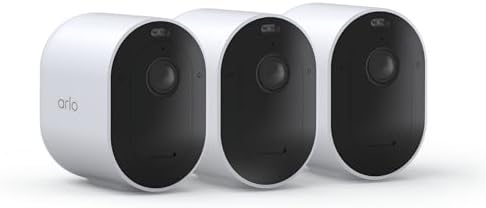
- Color Night Vision: Experience unparalleled surveillance camera technology with Color Night Vision; this spotlight camer…
- Color Night Vision: Experience unparalleled surveillance camera technology with Color Night Vision; this spotlight camer…
- Wide Field of View: Keep an eye on more with this outside security camera’s 160° Field of View; this wireless camera is …
Best For: Users who want a polished, feature-rich ecosystem and don’t mind paying for a subscription to unlock the full experience.
5. TP-Link Tapo C460 — Best Battery Life
Overview Tapo’s C460 made waves in 2026 for combining genuinely long battery life with 4K resolution and no mandatory subscription — a rare combination.
Key Features
- 4K resolution
- 10,000mAh battery rated for up to 200 days between charges
- Solar panel compatibility for essentially unlimited runtime in sunny locations
- Free AI-based person/vehicle/animal detection, no subscription required
Night Vision Performance Surprisingly strong color night vision for its price point, producing clear, usable footage after dark without needing a subscription to unlock the feature.
Weather Protection Rating IP66-rated, offering strong protection against wind-driven rain and dust — solid enough for most US, UK, and Canadian climates.
Smart Features Free AI detection is a genuine standout here, since many competitors charge a subscription just to unlock person/vehicle recognition. Tapo’s optional cloud plan (Tapo Care) is inexpensive if you do want offsite backup.
Installation Battery and solar-powered with a simple wireless setup process through the Tapo app.
Pros
- Exceptional battery life (up to 200 days)
- 4K video and free AI detection with no subscription required
- Solar panel option for near-continuous power
- Competitive price for the feature set
Cons
- Tapo’s smart home ecosystem is less mature than Google, Amazon, or Arlo
- Local storage requires a separately purchased microSD card
- Fewer third-party integrations than bigger-name brands
Best For: Buyers who want to “set it and forget it” without worrying about frequent recharging or ongoing fees.
6. Ring Spotlight Cam Plus — Best Ring Ecosystem Fit
Overview For households already using Ring video doorbells or other Ring devices, the Spotlight Cam Plus is the natural outdoor camera pairing, offering flexible power options and a built-in spotlight for deterrence.
Key Features
- 1080p/2K resolution depending on model configuration
- Choice of wired, battery, or solar power
- Built-in spotlight and siren for active deterrence
- Seamless integration with other Ring devices
Night Vision Performance Full-color night vision when the spotlight activates on motion detection, with a fallback to standard infrared when the light isn’t triggered. It’s effective, though the spotlight does announce the camera’s presence — useful for deterrence, less useful if you want to stay discreet.
Weather Protection Rating IP65-rated and built to handle rain and wind, though buyers in especially harsh climates may want additional overhead cover.
Smart Features 3D motion detection on select models helps reduce false alerts from passing cars on the street versus someone actually approaching your property. Full integration with Alexa and the broader Ring/Amazon ecosystem.
Installation Flexible power options make this one of the more adaptable cameras to install — you can choose wired for permanent locations or battery/solar for spots without easy electrical access.
Pros
- Flexible power options (wired, battery, or solar)
- Strong ecosystem integration if you already use Ring
- Built-in spotlight and siren aid deterrence
- 3D motion detection reduces false alerts on some models
Cons
- Cloud storage requires a Ring Protect subscription
- Resolution can vary by exact model/region — check listings carefully
- Spotlight can reduce the element of surprise
- 𝐍𝐢𝐠𝐡𝐭𝐭𝐢𝐦𝐞 𝐓𝐡𝐚𝐭’𝐬 𝐚𝐬 𝐁𝐫𝐢𝐠𝐡𝐭 𝐚𝐬 𝐃𝐚𝐲: Harness the power of a 4K camera combined with MaxColor Vision technology. eufyCam S3…
- 𝐑𝐞𝐥𝐢𝐚𝐛𝐥𝐞 𝐒𝐨𝐥𝐚𝐫 𝐏𝐨𝐰𝐞𝐫 𝐒𝐲𝐬𝐭𝐞𝐦: Experience peace of mind year-round with continuous, reliable security powered by SolarPlus…
- 𝐑𝐚𝐝𝐚𝐫-𝐏𝐨𝐰𝐞𝐫𝐞𝐝 𝐃𝐞𝐭𝐞𝐜𝐭𝐢𝐨𝐧 𝐀𝐥𝐞𝐫𝐭𝐬 𝐎𝐧𝐥𝐲 𝐖𝐡𝐚𝐭 𝐌𝐚𝐭𝐭𝐞𝐫𝐬: The dual motion detection system, combining radar and passive infrared…
Best For: Existing Ring users who want a matching outdoor camera that plays nicely with their doorbell and other Ring devices.
7. Blink Outdoor 4 — Best Budget Pick
Overview Owned by Amazon, Blink has carved out a niche as the budget-friendly, no-fuss option, and the Outdoor 4 continues that tradition with meaningfully improved night vision over its predecessor.
Key Features
- Full HD sensor (defaults to 720p to conserve battery, though it supports higher resolution)
- Runs on two AA batteries, rated for up to two years
- Wider field of view than the previous generation
- Person detection available with subscription
Night Vision Performance Daylight footage is solid for the price, but night vision is a mixed bag: color night vision can look somewhat blurry, and infrared footage is a bit soft compared to premium competitors. It’s functional for basic monitoring but not the pick if crisp identification after dark is your top priority.
Weather Protection Rating IP65-rated and built to handle everyday rain and snow exposure.
Smart Features Person detection and cloud storage require a subscription, though the base hardware works fine without one for basic motion alerts and local viewing.
Installation Wireless and genuinely simple — a small base station connects to your Wi-Fi, and the camera itself pairs to that base station rather than directly to your router.
Pros
- Excellent price-to-value ratio
- Long battery life (up to two years on AA batteries)
- Easy wireless setup with included mounting bracket
- Local storage via USB drive avoids mandatory subscription
Cons
- Night vision quality trails behind premium competitors
- Defaults to lower resolution to save battery
- Advanced features require a subscription

- Outdoor 4 is our fourth-generation wireless smart security camera with up to two-year battery life for around-the-clock …
- See and speak from the Blink app — Experience 1080p HD live view, infrared night vision, and crisp two-way audio.
- Two-year battery life — Set up in minutes and get up to two years of power with the included AA Energizer lithium batter…
Best For: Budget-conscious buyers who want reliable basic monitoring without a big upfront investment.
8. Wyze Cam v3 Pro — Best Value
Overview Wyze built its reputation on punching above its price point, and the v3 Pro continues that with a feature set that rivals cameras costing two or three times as much.
Key Features
- 2K resolution with built-in spotlight and siren
- Color night vision
- Free on-device person detection and activity zones
- Local 24/7 recording without a subscription
Night Vision Performance Color night vision paired with the built-in spotlight delivers surprisingly strong low-light clarity for the price, especially compared to other budget cameras.
Weather Protection Rating IP65-rated and built for outdoor use, holding up well against rain and typical seasonal weather.
Smart Features Free on-device person detection is a genuine standout at this price — many competitors charge a subscription for the same feature. Voice control works with both Alexa and Google Home.
Installation Wired power connection required, so plan for an outlet or extension cable near your mounting location. Setup through the Wyze app is straightforward.
Pros
- Outstanding value for the feature set
- Free person detection, no subscription required
- Local 24/7 recording included
- Works with both Alexa and Google Home
Cons
- Requires a wired power connection (less flexible placement)
- Data privacy practices have drawn some scrutiny in independent testing
- Build quality feels less premium than pricier competitors
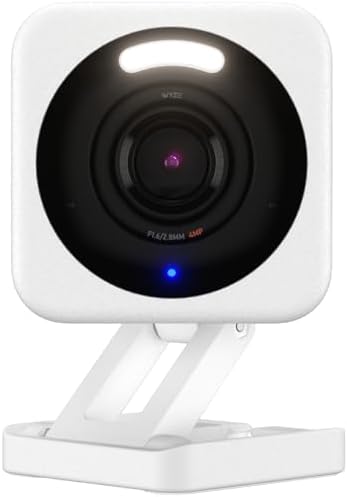
- SMART 2.5K QHD RESOLUTION — CAPTURE EVERY DETAIL — Record in crystal-clear 2560×1440 video with a 120° wide field of vie…
- ENHANCED COLOR NIGHT VISION — SEE CLEARLY IN TOTAL DARKNESS — Industry-leading Starlight Sensor paired with a 72-lumen s…
- IP65 WEATHERPROOF — BUILT FOR EVERY SEASON — Rated IP65 for dust-tight, water-jet-resistant protection against rain, sno…
Best For: Budget-focused buyers who still want strong smart detection features without paying for a subscription.
9. Reolink Duo 3 PoE — Best Wide-Coverage Wired Camera
Overview If you want to cover an entire yard or driveway with a single camera instead of mounting two or three separate units, the Duo 3 PoE’s dual-lens design is built exactly for that.
Key Features
- Dual forward-facing lenses stitched into a single 180-degree panoramic image
- 4K resolution
- Power over Ethernet (PoE) for a stable, always-on wired connection
- ColorX night vision technology shared with the Argus 4 Pro
Night Vision Performance Same strong color night vision technology as the Argus 4 Pro, benefiting from a wide aperture and large sensor rather than relying purely on a spotlight.
Weather Protection Rating IP66-rated, suitable for direct exposure to wind, rain, and dust in most climates.
Smart Features AI-based person, vehicle, and animal detection, with no subscription required for core functionality.
Installation Requires a PoE connection, meaning you’ll need either a PoE switch/injector or an NVR system. This makes it less of a plug-and-play option than battery models, but it rewards you with a rock-solid, always-on connection with no battery to manage.
Pros
- Extremely wide single-camera coverage
- No battery maintenance thanks to PoE wired power
- Strong color night vision
- No subscription required
Cons
- Requires PoE hardware, which adds setup complexity and cost
- Not ideal for renters or anyone who can’t run cabling
- Larger housing than most battery cameras

- This bundle contains NVR RLN8-410 *1, Duo 3 PoE Camera*4.
- 16MP UHD & COLOR NIGHT VISION: Featuring two 4K image sensors, this dual-lens camera brings 16 UHD clarity to you, ensur…
- 180° PANORAMIC VIEW & MOTION TRACK: The dual-image stitching algorithms, coupled with 4-core SoC, create 180° panoramic …
Best For: Homeowners covering a large driveway, yard, or parking area who want one camera to do the job of two.
10. Lorex 4K Smart Deterrence Camera — Best for Active Deterrence
Overview Lorex has built its outdoor lineup around “smart deterrence” — cameras that don’t just record incidents but actively try to prevent them using light, sound, and voice warnings.
Key Features
- 4K resolution
- Active deterrence features including spotlight, siren, and pre-recorded voice warnings
- Color night vision
- Wired power for continuous, always-on operation
Night Vision Performance Color night vision combined with the deterrence spotlight produces clear, well-lit footage, particularly effective at close and mid-range distances around entry points.
Weather Protection Rating IP67-rated, offering some of the strongest weatherproofing on this list — a good pick for harsh, wet, or flood-prone climates.
Smart Features Smart deterrence automatically triggers lights, sirens, or voice warnings when it detects a person lingering in a monitored zone, which can discourage package theft or trespassing before it happens.
Installation Wired installation required, so this is best suited for a more permanent setup rather than a quick DIY placement.
Pros
- Strong IP67 weatherproofing
- Active deterrence features (light, siren, voice) go beyond passive recording
- Sharp 4K color night vision
- No mandatory subscription for local recording (varies by bundle)
Cons
- Wired installation requires more setup effort
- Bulkier housing than battery-powered competitors
- Full smart features may require a Lorex NVR or cloud plan
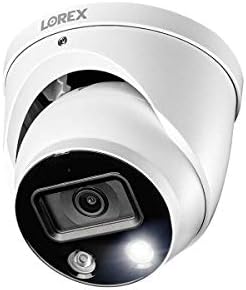
- Thanks to the camera’s powerful 8MP image sensor, you’ll experience the difference that 4K resolution makes when it come…
- Smart Person and Vehicle Detection helps identify more important objects that enter the camera’s field of view. Thanks t…
- Perfect for front doors and entranceways, Face Detection will only notify you of motion events when a face has been dete…
Best For: Homeowners who want their camera to actively discourage intruders and package thieves, not just record them.
Buying Guide
Choosing between these ten cameras comes down to matching the camera’s strengths to your specific situation. Here’s how to think it through.
Step 1: Decide Between Wired, Battery, and Solar Power
- Wired/PoE cameras offer the most reliable, always-on operation with no battery to manage, but installation is more involved and less flexible.
- Battery-powered cameras are the easiest to install (great for renters), but you’ll need to recharge or swap batteries periodically, unless you add solar.
- Solar-powered cameras are ideal for locations with good sun exposure and can eliminate the recharging chore almost entirely, though they’re less effective in shaded spots or during long, gray winters.
Step 2: Match Weatherproofing to Your Climate
- Mild, mostly dry climates: IP65 is usually sufficient.
- Heavy rain, snow, or coastal wind: Look for IP66 at minimum.
- Flood-prone areas or low-mounted cameras: IP67 offers extra peace of mind.
Also check the operating temperature range if you live somewhere with harsh winters — many parts of Canada and the northern US regularly see temperatures that can strain battery-powered cameras.
Step 3: Prioritize Night Vision Type Based on Your Goal
- If you want to identify faces, vehicles, or clothing after dark, prioritize color night vision with a wide aperture (f/1.0 to f/1.6 range).
- If you want discreet monitoring without alerting anyone, infrared-only night vision is less conspicuous since it doesn’t rely on a visible spotlight.
Step 4: Factor in Subscription Costs
Several cameras on this list require a monthly or annual subscription to unlock cloud storage, AI detection, or advanced alerts. Before buying, check whether the core features you actually need — like person detection or video history — are free or gated behind a paywall. Over two to three years, subscription fees can add up to more than the camera itself cost.
Step 5: Think About Smart Home Compatibility
If you already use Alexa, Google Home, or Apple HomeKit, choosing a camera that integrates natively will save you a lot of frustration. Check compatibility before buying rather than assuming — some brands (like Nest) work with only one ecosystem, while others (like Ring and Wyze) support multiple.
For a full-home setup, it’s also worth pairing your outdoor camera with a video doorbell and smart locks for layered protection. [Internal Link: Best Video Doorbells] and [Internal Link: Smart Locks Buying Guide] can help you round out the rest of your system.
Common Mistakes to Avoid
Even a great camera can underperform if it’s set up poorly. Here are the mistakes we see most often.
- Mounting too high or too low. Security experts generally recommend mounting outdoor cameras eight to ten feet off the ground — high enough to avoid easy tampering, but low enough to still capture clear facial detail.
- Ignoring the operating temperature range. A camera rated IP67 for water resistance can still fail in extreme cold if its battery isn’t rated for those temperatures.
- Pointing the camera at reflective surfaces or bright lights. Glass, pools, and neighboring floodlights can wash out night vision and trigger constant false alerts.
- Skipping firmware updates. Outdated firmware isn’t just a performance issue — it can leave known security vulnerabilities unpatched. The FCC and CISA both recommend keeping connected devices updated as a basic cybersecurity practice.
- Using weak Wi-Fi passwords or skipping two-factor authentication. Outdoor cameras are internet-connected devices, and a compromised account can expose your live feed. Follow the same password hygiene guidance the NIST digital identity guidelines recommend for any connected device.
- Overlooking local privacy and recording laws. Rules about recording audio, and about pointing cameras toward a neighbor’s property, vary across US states, UK regions, and Canadian provinces. It’s worth a quick check of local regulations before you finalize camera placement.
- Assuming higher resolution always means better night vision. As covered earlier, aperture and sensor size matter more than raw megapixel count once the lights go down.
Frequently Asked Questions
1. What is the best outdoor security camera for both night vision and bad weather? Based on our research, the Reolink Argus 4 Pro and eufyCam S3 Pro stand out as the strongest all-around picks, combining IP66/IP67 weatherproofing with genuinely capable color night vision.
2. Is IP66 good enough for heavy rain and snow? Yes. IP66-rated cameras are built to withstand powerful water jets from any direction, which covers the vast majority of storm conditions across the US, UK, and Canada. IP67 adds protection against temporary submersion, which is more relevant if your camera sits low to the ground in a flood-prone spot.
3. Do outdoor security cameras work without Wi-Fi? Most standard outdoor Wi-Fi cameras need an internet connection for remote viewing and cloud alerts, though many can still record locally to a microSD card without it. If you need coverage in an area without reliable Wi-Fi or a router, look at cellular-connected options that use a mobile data network instead.
4. What’s the difference between color night vision and infrared night vision? Infrared night vision produces black-and-white footage using invisible IR light and works well in total darkness. Color night vision uses a larger sensor and/or a spotlight to capture full-color footage, which is more useful for identifying details but can require more power.
5. Do I need a subscription for outdoor security cameras? It depends on the brand. Reolink, eufy, TP-Link Tapo, and Wyze generally offer strong core features without a mandatory subscription. Ring, Arlo, and Nest often require a paid plan to unlock cloud storage and advanced AI alerts.
6. How high should I mount an outdoor security camera? Most security professionals recommend mounting cameras roughly eight to ten feet above ground. This height balances a clear view of faces and activity with making the camera harder to reach or tamper with.
7. Can extreme cold damage a battery-powered security camera? Cold weather doesn’t usually damage the camera itself, but it can significantly reduce battery life and charging efficiency. If you live somewhere with harsh winters, look for cameras with a wide operating temperature range or consider a wired/PoE model that isn’t battery-dependent.
8. Are wireless outdoor security cameras as reliable as wired ones? Modern wireless cameras are quite reliable, but they depend on consistent Wi-Fi signal strength and periodic charging (unless solar-powered). Wired or PoE cameras avoid both issues at the cost of a more involved installation.
9. What’s the best outdoor camera for someone who doesn’t want a subscription? The TP-Link Tapo C460 and eufyCam S3 Pro are strong choices, both offering free AI-based detection and local storage without requiring an ongoing plan.
10. Do outdoor security cameras deter crime? Visible cameras, especially those with spotlights, sirens, or voice warnings, can act as a deterrent. However, no camera fully prevents crime on its own — pairing a camera with good lighting, a video doorbell, and smart locks provides more comprehensive protection. [Internal Link: Home Security Hub]
Final Verdict
If you’re looking for the single best outdoor security camera for night vision and weather protection in 2026, our top recommendation is the Reolink Argus 4 Pro. It combines a wide 180-degree color night vision view with a solid IP66 weatherproof rating and no mandatory subscription, making it a genuinely well-rounded choice for most homes.
That said, “best” really does depend on your situation:
- Want the sharpest possible night-time footage? Go with the eufyCam S3 Pro.
- Deep in the Google smart home ecosystem? The Google Nest Cam fits right in.
- Working with a tight budget? The Blink Outdoor 4 or Wyze Cam v3 Pro deliver solid performance for the price.
- Need to cover a large yard with one camera? The Reolink Duo 3 PoE is purpose-built for that.
Whichever you choose, prioritize the two things that matter most once conditions get tough: a night vision system that actually produces usable footage in the dark, and a weatherproof rating that matches your climate — not just a marketing checkbox.
Ready to Upgrade Your Home Security?
A great outdoor camera is one piece of a bigger security picture. Once you’ve picked your camera, take a look at our guides on [Internal Link: Best Video Doorbells] to cover your front entrance and [Internal Link: Smart Locks Buying Guide] to lock down access points, or head over to our [Internal Link: Home Security Hub] for a complete roadmap to securing your home in 2026.
Pingback: Best Smart Locks for Apartments, Homes, and Rental Properties in 2026: Top Secure & Keyless Door Locks Compared - Gadget Sentinel
Pingback: Best Video Doorbells Without a Monthly Subscription in 2026 (
Pingback: The Ultimate Smart Home Security Essentials Guide for Every Homeowner in 2026: Devices, Features & Buying Tips - Gadget Sentinel
Pingback: How to Choose the Best Indoor Security Cameras for Pets, Kids, and Elderly Care in 2026: Features, Buying Guide & Expert Recommendations - Gadget Sentinel
Pingback: Best Home Security Cameras for Every Budget in 2026: Complete Buyer's Guide to Indoor, Outdoor, Wireless & Smart Security Cameras - Gadget Sentinel
Pingback: Smart Home Security Essentials Every Homeowner Should Have in 2026 - Gadget Sentinel